Why does my cat watch a toy but refuse to chase it?
Watching a toy is part of hunting, not failed play. The cat may be calculating distance or waiting for slower, quieter prey movement and better cover before joining.
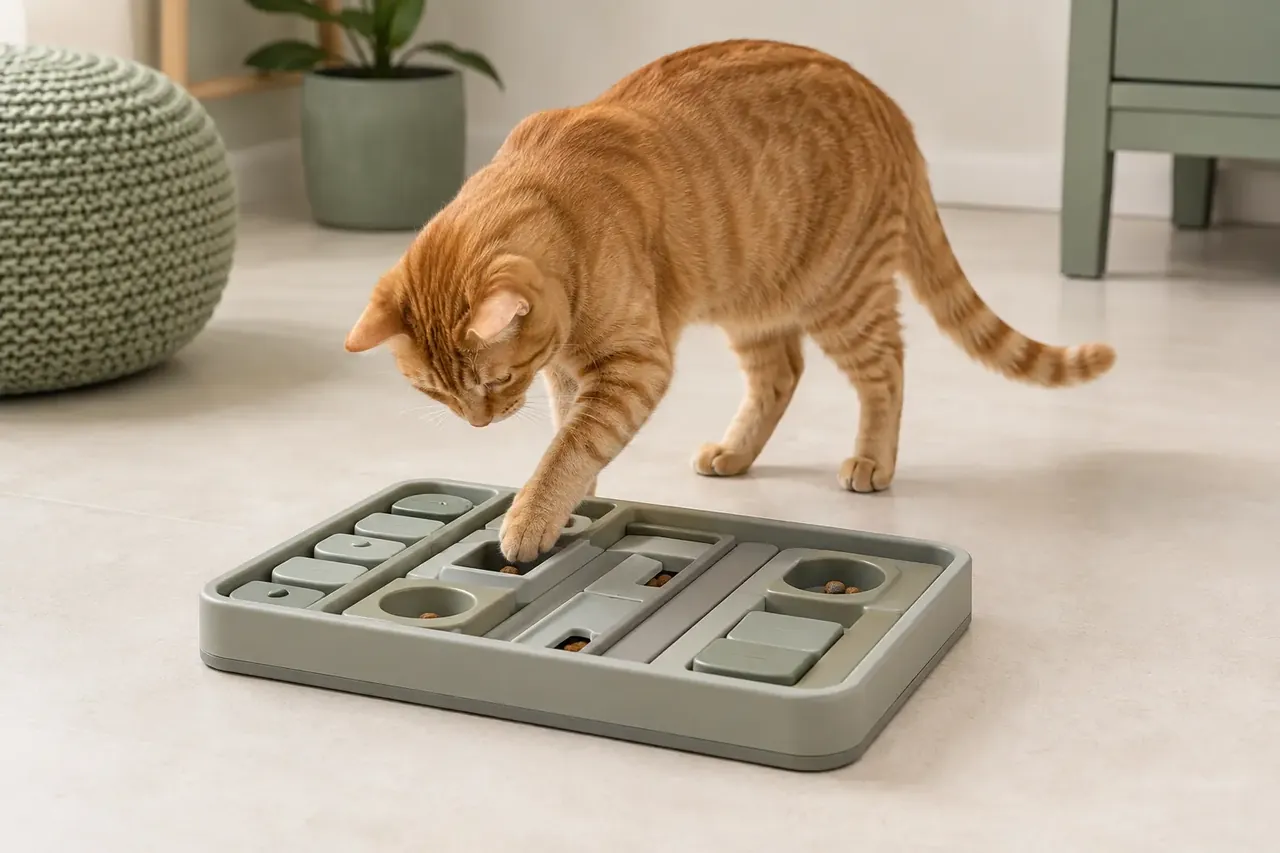 Topic illustration selected for this guide. Some learning images may be AI-assisted.
Why does my cat watch a toy but refuse to chase it — the quick answer
✓ Watching and calculating are genuine parts of feline hunting behaviour
✓ Move it away like prey, hide it behind an object and allow long pauses before a small escape.
✓ A sudden refusal to move or jump with stiffness or appetite change needs veterinary assessment.
Watching and calculating are genuine parts of feline hunting behaviour. The toy may be too close, fast, noisy or exposed for the cat's preferred strategy.
The short answer
Watching and calculating are genuine parts of feline hunting behaviour. The toy may be too close, fast, noisy or exposed for the cat's preferred strategy.
What to observe first
Compare the moment with your cat’s usual pattern. Note timing, frequency, body language, appetite, litter-box use, mobility and any recent household change.
Why the setting matters
The toy may be too close, fast, noisy or exposed for the cat's preferred strategy. One isolated detail rarely explains behaviour or health on its own, so look at the whole cat and the immediate environment.
What you can do
Move it away like prey, hide it behind an object and allow long pauses before a small escape.
A gentle way to test it
Make one small safe adjustment and give the cat time and choice. Avoid punishment, forced handling and several changes at once, because they make the response harder to understand.
When to contact a veterinarian
A sudden refusal to move or jump with stiffness or appetite change needs veterinary assessment.
Prepare useful information
Write down when it began and how often it occurs. A short video, clear photo, food record or litter record can help a veterinary professional assess a pattern that may not appear during the appointment.
Move the toy like prey, not toward the cat
Drag the toy away along an edge, let it disappear behind furniture and pause for several seconds. Keep it low and avoid waving it over the cat's face. Allow stalking from a bed or hiding place, then offer an easy catch when the cat reaches or pounces.
DEEPER GUIDE1 more detailed sectionsOpen +
Lower the difficulty and pressure
Try a quieter toy, a non-slip surface and a short session without an audience. Never place the cat in front of the toy or force movement. A broad sudden loss of play together with stiffness, reduced jumping, appetite change or hiding needs veterinary assessment.
Your quick checklist
Your progress is saved on this device.
Three simple things you can do
You do not have to change everything today. Pick one step that feels realistic, try it and see how your cat responds.
- 1Try smaller, slower prey-like movements behind cover.
- 2Play at naturally active times and allow long pauses.
- 3Offer different textures and enough distance from other cats.
Common mistakes
×Waving toys directly at the face.
×Assuming watching is not engagement.
×Forcing participation.
Questions cat people ask
Why does my cat only watch toys?+
Watching and calculating are parts of hunting; the toy may also be too fast, close or predictable.
Does every cat need vigorous play?+
Needs vary with age and health, but safe opportunities to stalk, choose and explore remain valuable.
Still looking for the right answer?
Search the full EverYes Cats encyclopedia with your own words — a symptom, food, behaviour, breed or everyday question.
Checked, dated and transparent
- Prepared by
- EverYes Cats editorial team
- Last updated
- 13 August 2026
- Source checked
- 13 August 2026
- Primary reference
- International Cat Care ↗
We begin with the named reference, rewrite the information in plain language and add practical cat-parent steps. Urgent health statements are checked against veterinary sources. This guide has not been individually reviewed by a veterinarian unless explicitly stated. It provides education, not diagnosis or treatment.
Spotted something unclear or outdated? Tell us so we can review it.
Your answer helps us improve the cat encyclopedia.
Movement, reflections, boredom or testing the water surface can turn drinking into play during active hours.