Why Does My Cat Move the Tail Tip While Resting?
A small tail-tip movement can accompany light sleep, attention or mild stimulation while the body remains relaxed. Read the full body, try a gentle response and know when the change matters.
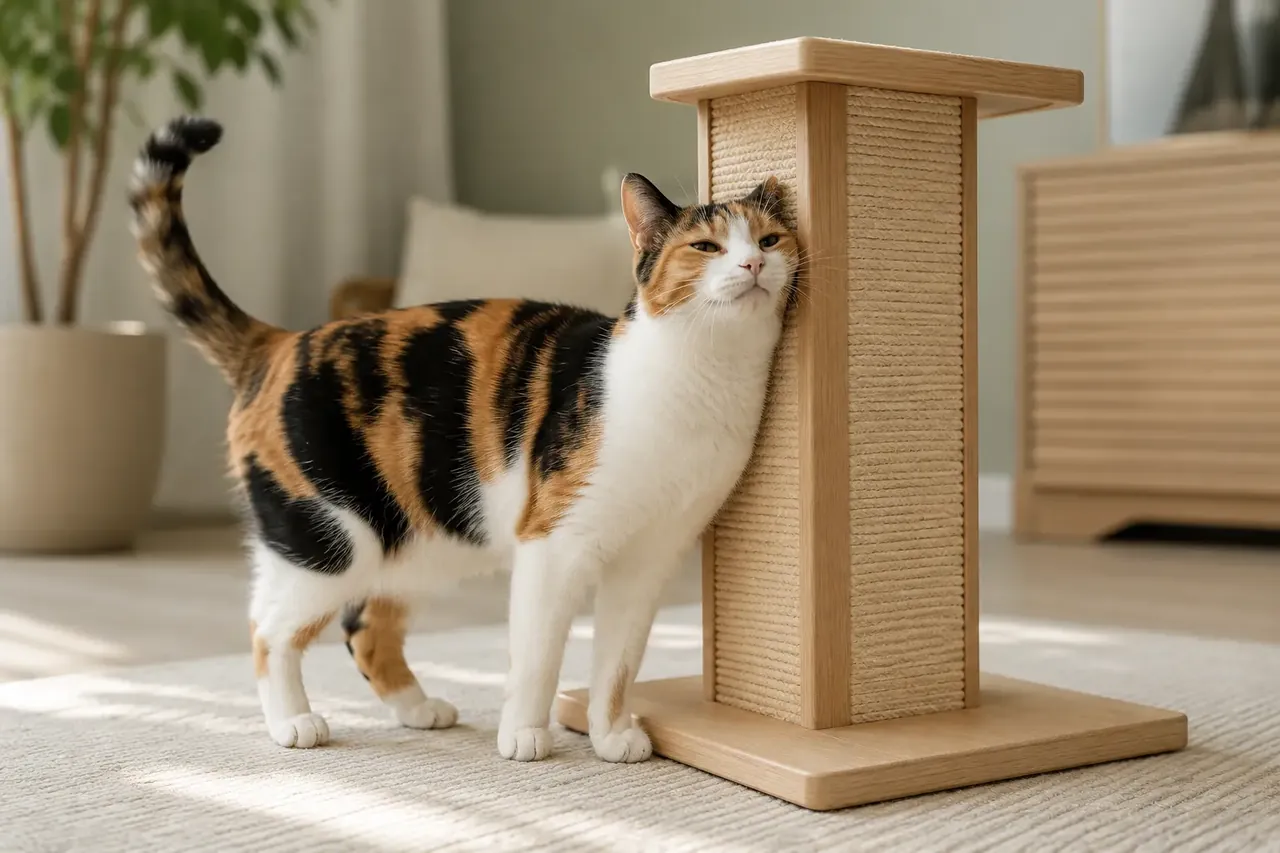 Topic illustration selected for this guide. Some learning images may be AI-assisted.
Why Does My Cat Move the Tail Tip While Resting — the quick answer
✓ A small tail-tip movement can accompany light sleep, attention or mild stimulation while the body remains relaxed.
✓ Let the cat rest and stop petting when tail movement increases.
✓ Whole-body tremors, unresponsiveness, pain or abnormal breathing needs veterinary care.
A small tail-tip movement can accompany light sleep, attention or mild stimulation while the body remains relaxed. One signal never tells the whole story, so context and choice come first.
The quick answer
A small tail-tip movement can accompany light sleep, attention or mild stimulation while the body remains relaxed.
Read the whole cat
Check muscle tension, ears, breathing and whether movement becomes forceful when touched.
Why context changes the meaning
Ears, eyes, whiskers, tail, posture, movement and the immediate situation should be read together rather than as isolated signals.
What to do now
Let the cat rest and stop petting when tail movement increases.
Keep the interaction choice-based
Pause often, keep an easy exit and let the cat decide whether to approach, continue or leave. Avoid punishment and forced contact.
When to seek professional help
Whole-body tremors, unresponsiveness, pain or abnormal breathing needs veterinary care.
What to record
Note the trigger, distance, recovery time and what the body does before and after. A short video may reveal details that are easy to miss.
The practical takeaway
Start here: Let the cat rest and stop petting when tail movement increases. Use the warning guidance for a sudden, persistent or distressing change.
Your quick checklist
Your progress is saved on this device.
Three simple things you can do
You do not have to change everything today. Pick one step that feels realistic, try it and see how your cat responds.
- 1Observe your cat’s individual baseline.
- 2Make one gentle change at a time.
- 3Ask a qualified professional when health or safety is involved.
Common mistakes
×Waiting for a dramatic symptom instead of noticing smaller changes from the cat’s normal routine.
×Changing several things at once, making it difficult to learn what actually helped.
×Treating general guidance as a substitute for advice from a veterinarian who knows the individual cat.
Questions cat people ask
Does every cat follow the same rule?+
No. Age, health, history, temperament and environment all change what works for an individual.
When should I seek professional help?+
Seek veterinary advice for sudden, persistent or concerning changes and urgent help for breathing difficulty, collapse, seizures, poisoning or urinary obstruction signs.
Still looking for the right answer?
Search the full EverYes Cats encyclopedia with your own words — a symptom, food, behaviour, breed or everyday question.
Checked, dated and transparent
- Prepared by
- EverYes Cats editorial team
- Last updated
- 15 August 2026
- Source checked
- 15 August 2026
- Primary reference
- International Cat Care ↗
We begin with the named reference, rewrite the information in plain language and add practical cat-parent steps. Urgent health statements are checked against veterinary sources. This guide has not been individually reviewed by a veterinarian unless explicitly stated. It provides education, not diagnosis or treatment.
Spotted something unclear or outdated? Tell us so we can review it.
Your answer helps us improve the cat encyclopedia.
Wrapping or curving the tail can be a friendly contact gesture during a relaxed greeting. Read the full body, try a gentle response and know when the change matters.