Why won’t my cat use a covered litter box?
A cat may avoid a covered litter box because it traps odour, feels cramped or has one easily blocked entrance. Offer a fair uncovered comparison.
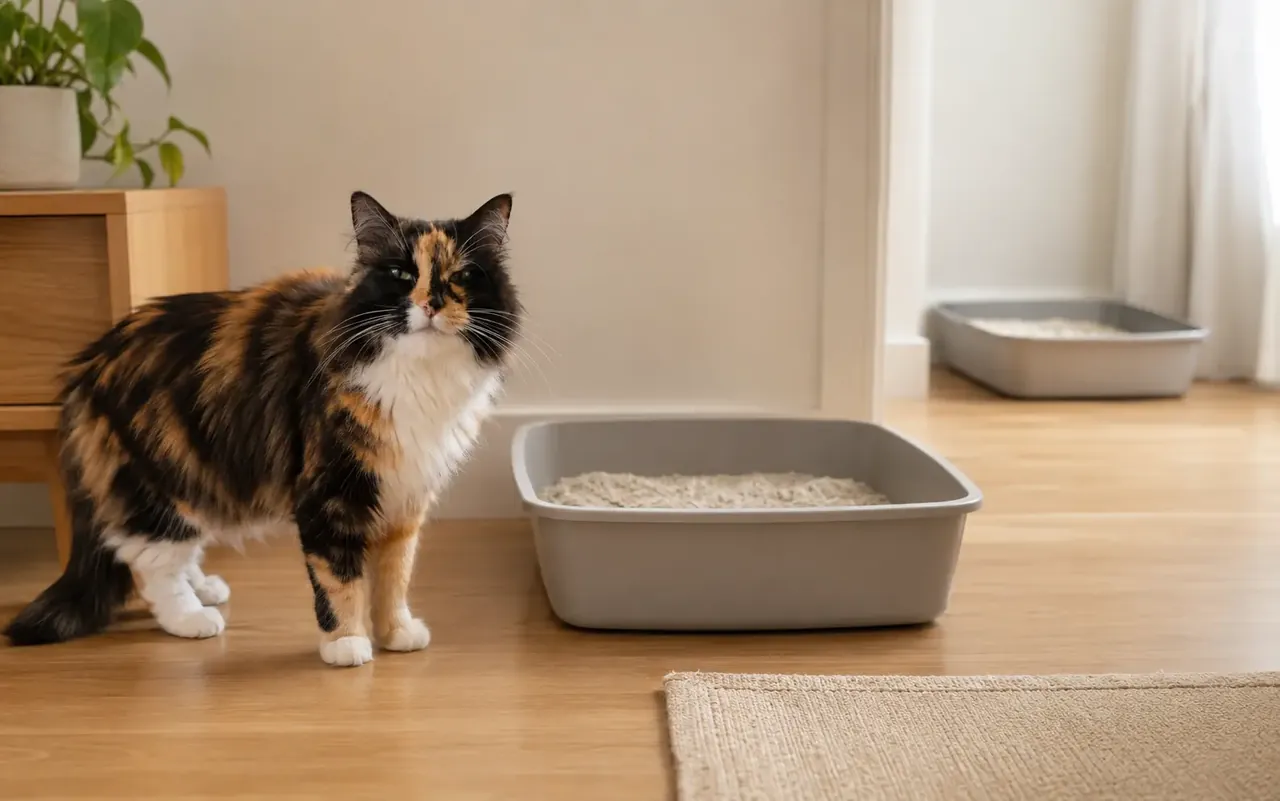 Topic illustration selected for this guide. Some learning images may be AI-assisted.
Why won’t my cat use a covered litter box — the quick answer
✓ Offer an uncovered box beside the covered one
✓ Remove the flap before expecting full use
✓ Prioritize size, cleanliness and escape access
A covered box may look tidy to people while concentrating odor and limiting visibility for the cat. Some cats use one happily; others avoid the small opening, swinging flap, cramped turning space or the possibility of another cat waiting outside.
Run a fair preference test
Place a large uncovered box with the same litter near the existing one. Keep both equally clean and record use for at least several calm days rather than repeatedly placing the cat inside.
Check the dimensions
The cat should be able to enter, turn and dig without pressing against the walls. Large cats, kittens and cats with arthritis may struggle with small doors or high entrances.
Consider odor and ambush risk
A lid can hold odor even when the box looks clean. In multi-cat homes, one entrance creates a dead end. Spread boxes across locations with more than one approach route.
Respond to sudden avoidance
A new litter-box change can reflect pain, urinary disease, constipation or mobility difficulty. Arrange veterinary advice instead of assuming the cat is being difficult.
What to check first
Check entrance height, flap, internal turning space, cleanliness and whether another pet waits outside. Sudden avoidance may also reflect pain or urinary disease.
What to do next
Place a large uncovered box with the same familiar litter beside the covered option and keep both equally clean. Never force the cat inside. Straining, blood, frequent visits, pain or little urine needs prompt veterinary care.
Your quick checklist
Your progress is saved on this device.
Three simple things you can do
You do not have to change everything today. Pick one step that feels realistic, try it and see how your cat responds.
- 1Offer a large uncovered box beside the covered option.
- 2Use the same unscented litter in both.
- 3Place boxes in quiet separate locations with safe exits.
Common mistakes
×Putting the cat inside repeatedly.
×Comparing boxes with different litter or cleanliness.
×Ignoring sudden toileting change.
Questions cat people ask
Do cats prefer covered or uncovered litter boxes?+
Preferences differ, but many cats benefit from the space, ventilation and visibility of a large uncovered box.
Can I just remove the lid?+
Yes, provided the remaining tray is stable, spacious and easy to enter; removing a swinging flap can also help.
Still looking for the right answer?
Search the full EverYes Cats encyclopedia with your own words — a symptom, food, behaviour, breed or everyday question.
Checked, dated and transparent
- Prepared by
- EverYes Cats editorial team
- Last updated
- 14 August 2026
- Source checked
- 14 August 2026
- Primary reference
- FelineVMA Healthy Feline Environment ↗
We begin with the named reference, rewrite the information in plain language and add practical cat-parent steps. Urgent health statements are checked against veterinary sources. This guide has not been individually reviewed by a veterinarian unless explicitly stated. It provides education, not diagnosis or treatment.
Spotted something unclear or outdated? Tell us so we can review it.
Your answer helps us improve the cat encyclopedia.
A formula, fragrance, texture or dust level can vary even when the packaging looks familiar. Learn what to check, what to change safely and when professional help matters.