Why a cat rolls onto the back
A cat rolling onto the back often shows comfort, greeting or playfulness, but it is not automatically an invitation to touch the belly.
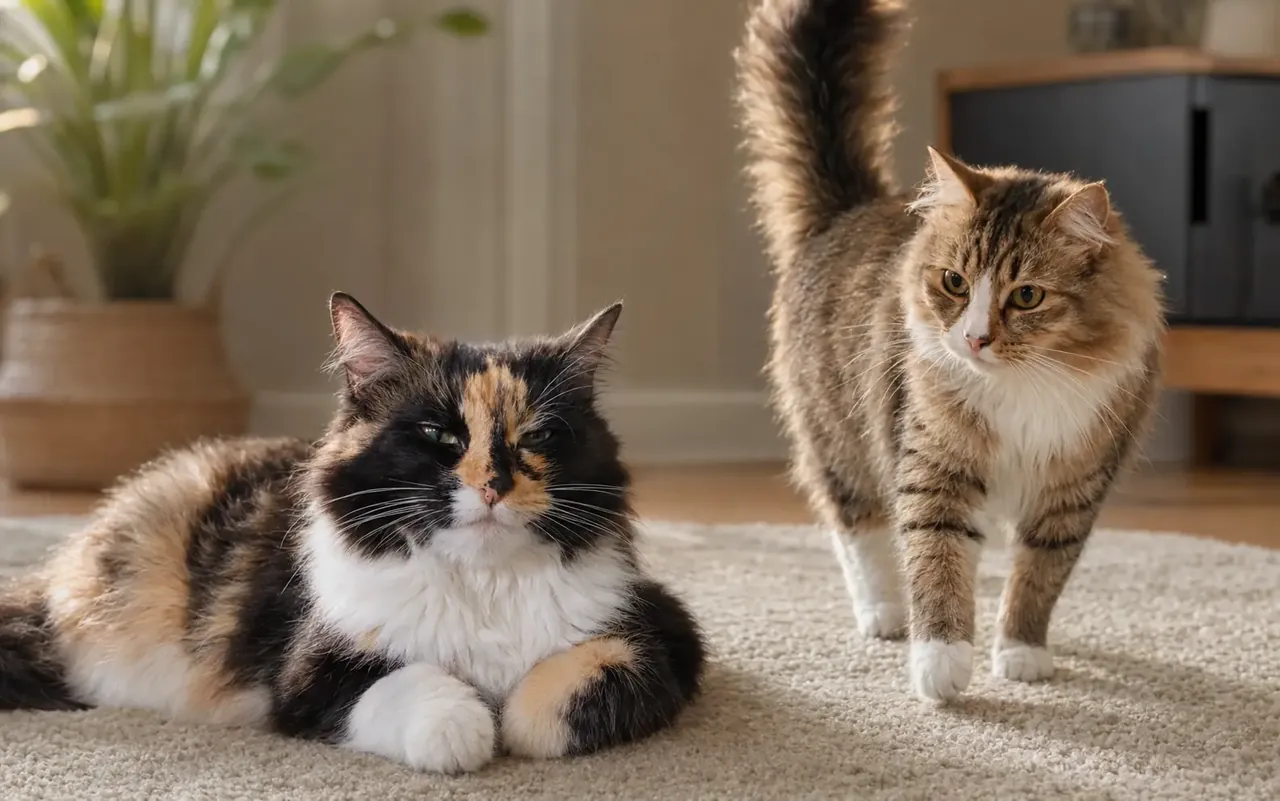 Topic illustration selected for this guide. Some learning images may be AI-assisted.
Why a cat rolls onto the back — the quick answer
✓ Do not assume the belly is offered for petting
✓ Watch paws, tail and ears
✓ Offer cheek contact or a toy instead
✓ Respecting a no builds trust
An exposed belly can show comfort, but the vulnerable posture does not automatically invite touch. Cats may roll to stretch, solicit play, scent-mark or prepare all four paws for defence.
Relaxed roll
Soft limbs, slow movement, neutral ears and a loose tail suggest comfort. The cat may simply enjoy being near you without wanting contact.
Playful roll
Focused eyes and reaching paws may invite a toy. Use a wand at a distance instead of hands so play does not become biting practice.
Defensive roll
Flattened ears, tense paws, wide pupils, growling or fast tail movement means the cat may be preparing to protect itself. Increase distance.
Ask without touching the belly
Offer one or two strokes on a familiar preferred area, then pause. If the cat leans in, continue briefly; if not, let the moment remain social without handling.
What to check first
Read the ears, pupils, tail, paws and muscle tension. A relaxed roll can change quickly if a hand moves toward a protected area.
What to do next
Pause, offer a hand near the cheek or begin play with a toy, and let the cat choose contact. Stop at tail flicking, skin twitching or grabbing. A sudden new reluctance to roll, abdominal guarding or pain needs veterinary assessment.
Your quick checklist
Your progress is saved on this device.
Three simple things you can do
You do not have to change everything today. Pick one step that feels realistic, try it and see how your cat responds.
- 1Treat the roll as information about comfort, play or greeting rather than automatic touch permission.
- 2Pause and let the cat choose whether to approach your hand.
- 3Pet familiar preferred areas unless the individual clearly enjoys belly contact.
Common mistakes
×Immediately rubbing every exposed belly.
×Calling a defensive grab unpredictable after ignoring tension.
×Holding the cat down when it changes its mind.
Questions cat people ask
Does showing the belly mean a cat trusts me?+
It can indicate comfort or social confidence, but it is not necessarily an invitation to touch the vulnerable abdomen.
Why does my cat bite when I rub its belly?+
The cat may be protecting a sensitive area or becoming overstimulated. Stop before tension builds and choose touch areas the cat consistently accepts.
Still looking for the right answer?
Search the full EverYes Cats encyclopedia with your own words — a symptom, food, behaviour, breed or everyday question.
Checked, dated and transparent
- Prepared by
- EverYes Cats editorial team
- Last updated
- 14 August 2026
- Source checked
- 14 August 2026
- Primary reference
- FelineVMA Healthy Feline Environment ↗
We begin with the named reference, rewrite the information in plain language and add practical cat-parent steps. Urgent health statements are checked against veterinary sources. This guide has not been individually reviewed by a veterinarian unless explicitly stated. It provides education, not diagnosis or treatment.
Spotted something unclear or outdated? Tell us so we can review it.
Your answer helps us improve the cat encyclopedia.
Turning the gaze away can reduce social pressure and help keep an interaction calm. Read the full body, try a gentle response and know when the change matters.