A senior-friendly home
A senior-friendly home keeps food, water, litter, warmth and favourite resting places within easy reach. Small changes can protect independence without forcing a cat to stop using familiar spaces.
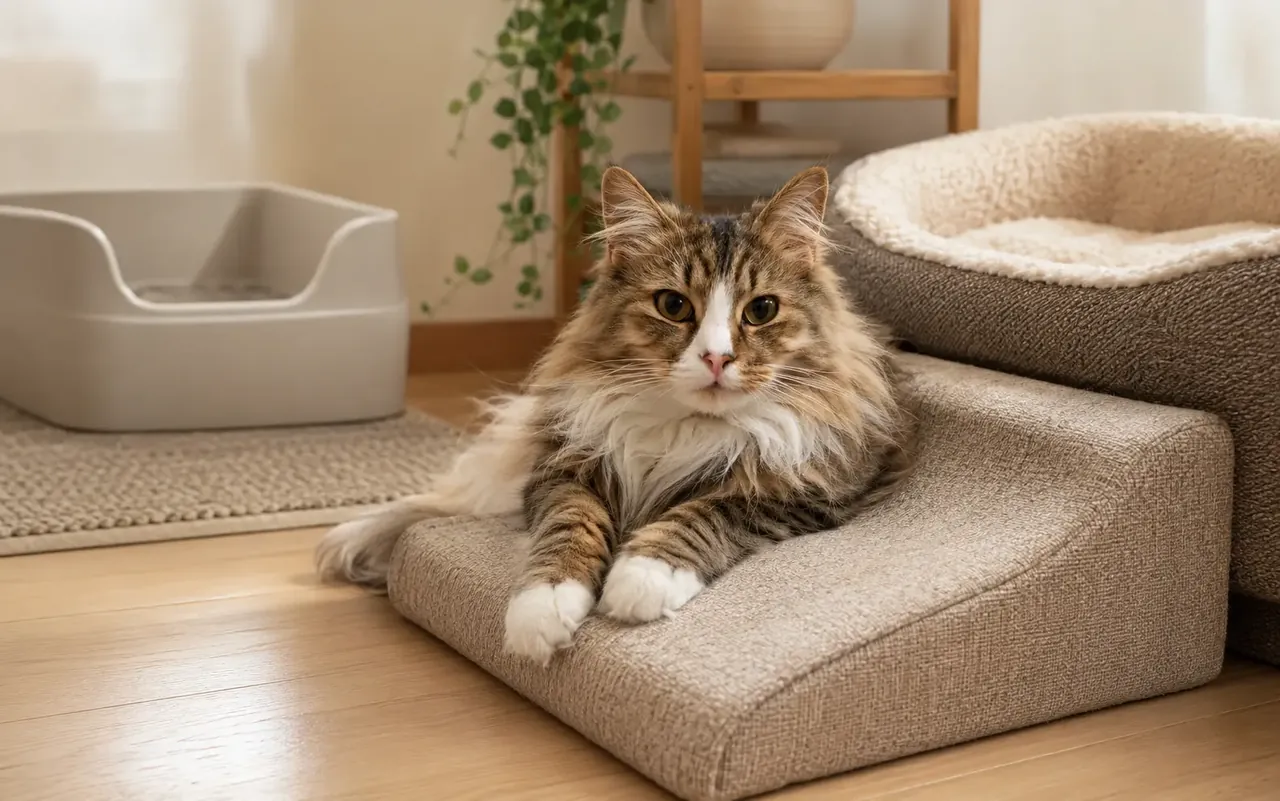 Topic illustration selected for this guide. Some learning images may be AI-assisted.
A senior-friendly home — the quick answer
✓ Small access changes can protect comfort and independence.
✓ Add steps, warm beds, non-slip paths and low-entry litter boxes.
✓ Pain and reduced mobility deserve veterinary assessment.
Small access changes can protect comfort and independence. This guide turns the idea into small practical steps while keeping health, choice and individual temperament in view.
Make everyday routes easier for a senior cat
Comfort improves when essential resources require less climbing, balancing and effort.
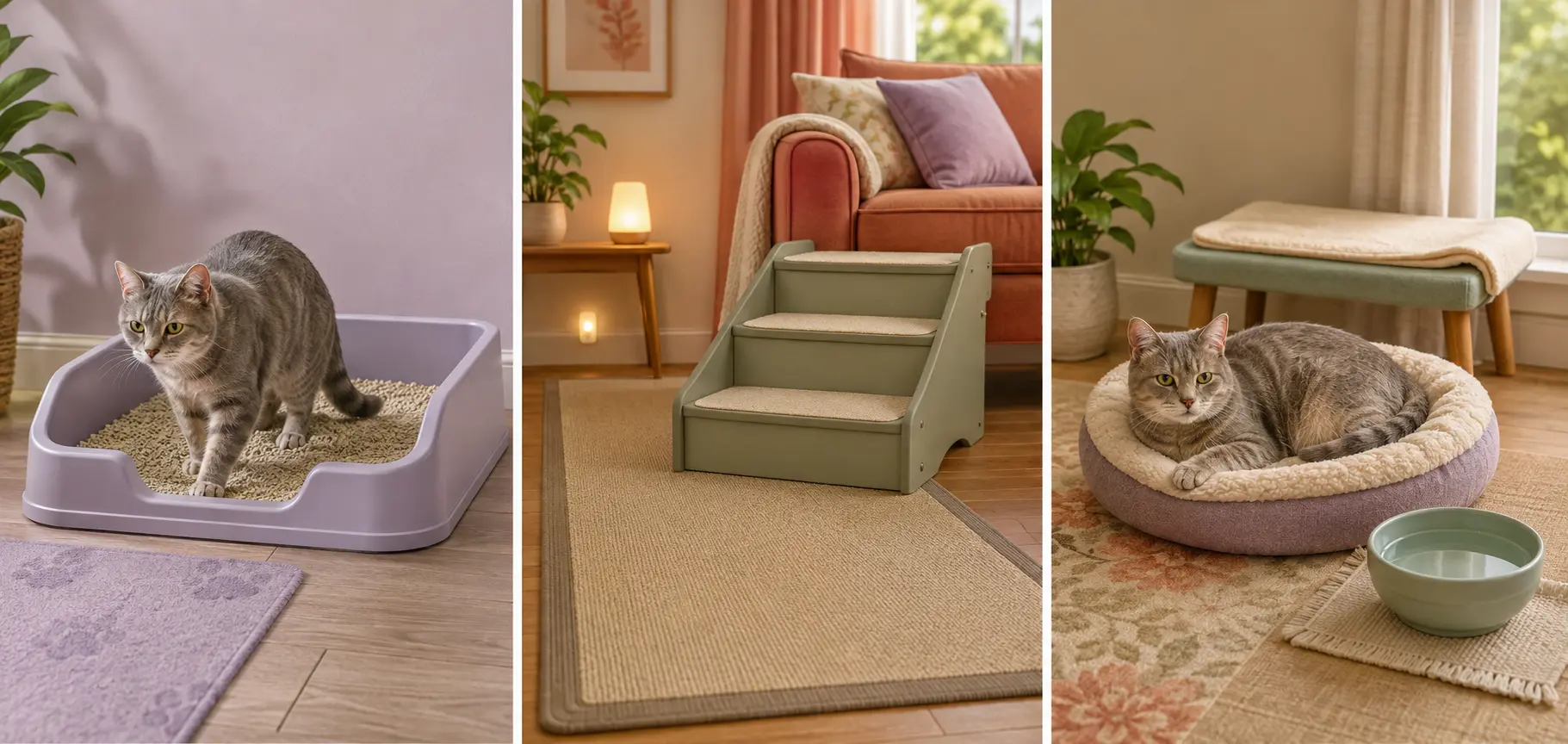
- 1Lower the entry
Offer a large low-entry litter tray and keep food and water on the cat's main living level.
- 2Build non-slip routes
Connect favorite places with secure rugs, gentle steps or ramps and clear night lighting.
- 3Bring comfort within reach
Provide warm supportive beds and easy access to resting places without a difficult jump.
Start here
Small access changes can protect comfort and independence.
A practical plan
Add steps, warm beds, non-slip paths and low-entry litter boxes.
Know when to pause
Pain and reduced mobility deserve veterinary assessment.
Map the routes used every day
Watch the cat travel between sleeping places, bowls, litter trays, windows and family areas. Look for hesitation before jumps, slipping on smooth floors, pausing on stairs or choosing to toilet beside a high-sided tray. Place non-slip runners where the cat actually walks, add broad stable steps or a gentle ramp, and keep essential resources on the main living level.
Make comfort easy to choose
Offer a large low-entry litter tray, warm supportive beds away from draughts and night lighting along important routes. Keep changes gradual so familiar scent and location are not lost all at once. New stiffness, missed jumps, reduced grooming, toileting changes or reluctance to move deserves veterinary assessment rather than being dismissed as normal ageing.
Your quick checklist
Your progress is saved on this device.
Three simple things you can do
You do not have to change everything today. Pick one step that feels realistic, try it and see how your cat responds.
- 1Observe your cat’s individual baseline.
- 2Make one gentle change at a time.
- 3Ask a qualified professional when health or safety is involved.
Common mistakes
×Waiting for a dramatic symptom instead of noticing smaller changes from the cat’s normal routine.
×Changing several things at once, making it difficult to learn what actually helped.
×Treating general guidance as a substitute for advice from a veterinarian who knows the individual cat.
Questions cat people ask
Does every cat follow the same rule?+
No. Age, health, history, temperament and environment all change what works for an individual.
When should I seek professional help?+
Seek veterinary advice for sudden, persistent or concerning changes and urgent help for breathing difficulty, collapse, seizures, poisoning or urinary obstruction signs.
Still looking for the right answer?
Search the full EverYes Cats encyclopedia with your own words — a symptom, food, behaviour, breed or everyday question.
Checked, dated and transparent
- Prepared by
- EverYes Cats editorial team
- Last updated
- 4 September 2026
- Source checked
- 4 September 2026
- Primary reference
- FelineVMA Life Stage Guidelines ↗
We begin with the named reference, rewrite the information in plain language and add practical cat-parent steps. Urgent health statements are checked against veterinary sources. This guide has not been individually reviewed by a veterinarian unless explicitly stated. It provides education, not diagnosis or treatment.
Spotted something unclear or outdated? Tell us so we can review it.
Your answer helps us improve the cat encyclopedia.
Communication and home design when sound is no longer reliable.