Why do I find hollow claw pieces on the floor?
Thin hollow claw pieces on the floor are usually normal shed outer sheaths, not whole claws. Scratching helps cats remove these layers as a sharper claw grows beneath.
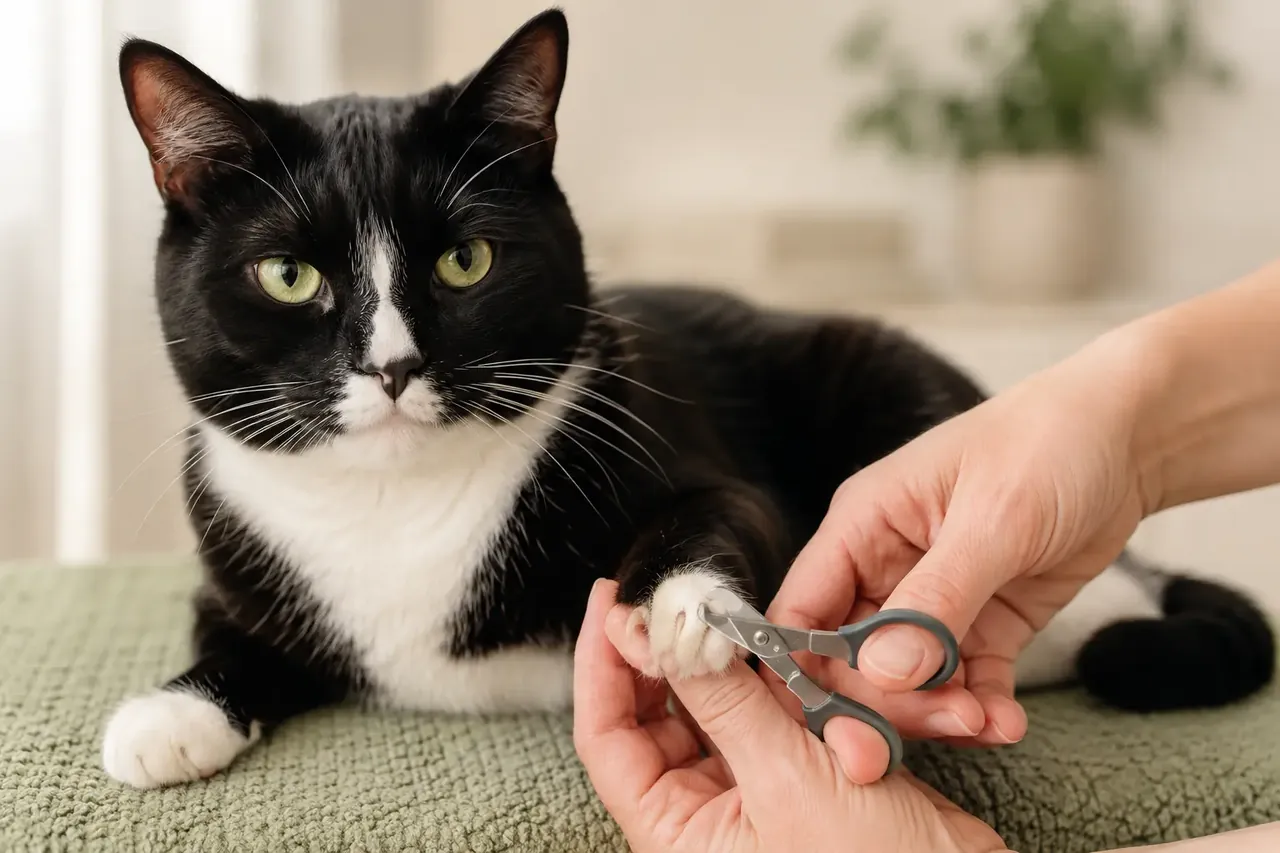 Topic illustration selected for this guide. Some learning images may be AI-assisted.
Why do I find hollow claw pieces on the floor — the quick answer
✓ Cats normally shed the outer claw sheath as a sharper layer develops underneath
✓ Provide sturdy scratchers and check the claws during calm routine handling.
✓ Bleeding, swelling, split claws, limping or a claw growing into the pad needs veterinary care.
Cats normally shed the outer claw sheath as a sharper layer develops underneath. Scratchers help remove these translucent curved shells.
The short answer
Cats normally shed the outer claw sheath as a sharper layer develops underneath. Scratchers help remove these translucent curved shells.
What to observe first
Compare the moment with your cat’s usual pattern. Note timing, frequency, body language, appetite, litter-box use, mobility and any recent household change.
Why the setting matters
Scratchers help remove these translucent curved shells. One isolated detail rarely explains behaviour or health on its own, so look at the whole cat and the immediate environment.
What you can do
Provide sturdy scratchers and check the claws during calm routine handling.
A gentle way to test it
Make one small safe adjustment and give the cat time and choice. Avoid punishment, forced handling and several changes at once, because they make the response harder to understand.
When to contact a veterinarian
Bleeding, swelling, split claws, limping or a claw growing into the pad needs veterinary care.
Prepare useful information
Write down when it began and how often it occurs. A short video, clear photo, food record or litter record can help a veterinary professional assess a pattern that may not appear during the appointment.
Know what a normal sheath looks like
A shed sheath is light, curved, translucent and hollow. It is often found near scratchers or favourite sleeping places. Provide sturdy vertical and horizontal scratching options and let the cat choose the preferred material and angle.
DEEPER GUIDE1 more detailed sectionsOpen +
Inspect claws gently for problems
During calm handling, check that claws retract normally and are not thick, split, bleeding or growing toward the pad. Senior cats may shed sheaths less efficiently and need more frequent checks. Swelling, limping, pain or an embedded claw needs veterinary care.
Your quick checklist
Your progress is saved on this device.
Three simple things you can do
You do not have to change everything today. Pick one step that feels realistic, try it and see how your cat responds.
- 1Recognise thin curved translucent shells as normal shed claw layers.
- 2Provide sturdy scratching surfaces in preferred angles.
- 3Inspect the actual claws for splitting, swelling or overgrowth during routine care.
Common mistakes
×Assuming every sheath is a broken claw.
×Pulling layers from the nail.
×Ignoring blood, limping or a claw growing into the pad.
Questions cat people ask
Why do I find cat claw pieces on the floor?+
Cats naturally shed the outer keratin sheath as claws grow, often during scratching. The hollow shell can look like a whole claw.
When is a lost claw abnormal?+
Bleeding, pain, a solid torn claw, swelling, discharge or limping requires veterinary attention.
Still looking for the right answer?
Search the full EverYes Cats encyclopedia with your own words — a symptom, food, behaviour, breed or everyday question.
Checked, dated and transparent
- Prepared by
- EverYes Cats editorial team
- Last updated
- 13 August 2026
- Source checked
- 13 August 2026
- Primary reference
- Cornell Feline Health Center ↗
We begin with the named reference, rewrite the information in plain language and add practical cat-parent steps. Urgent health statements are checked against veterinary sources. This guide has not been individually reviewed by a veterinarian unless explicitly stated. It provides education, not diagnosis or treatment.
Spotted something unclear or outdated? Tell us so we can review it.
Your answer helps us improve the cat encyclopedia.
Gentle claw nibbling can remove old sheaths, but repeated biting may signal irritation or pain. Learn what to check, what to change safely and when professional help matters.