Slow blinking: what the research can—and cannot—tell us
A closer look at relaxed eyes, context and respectful interaction.
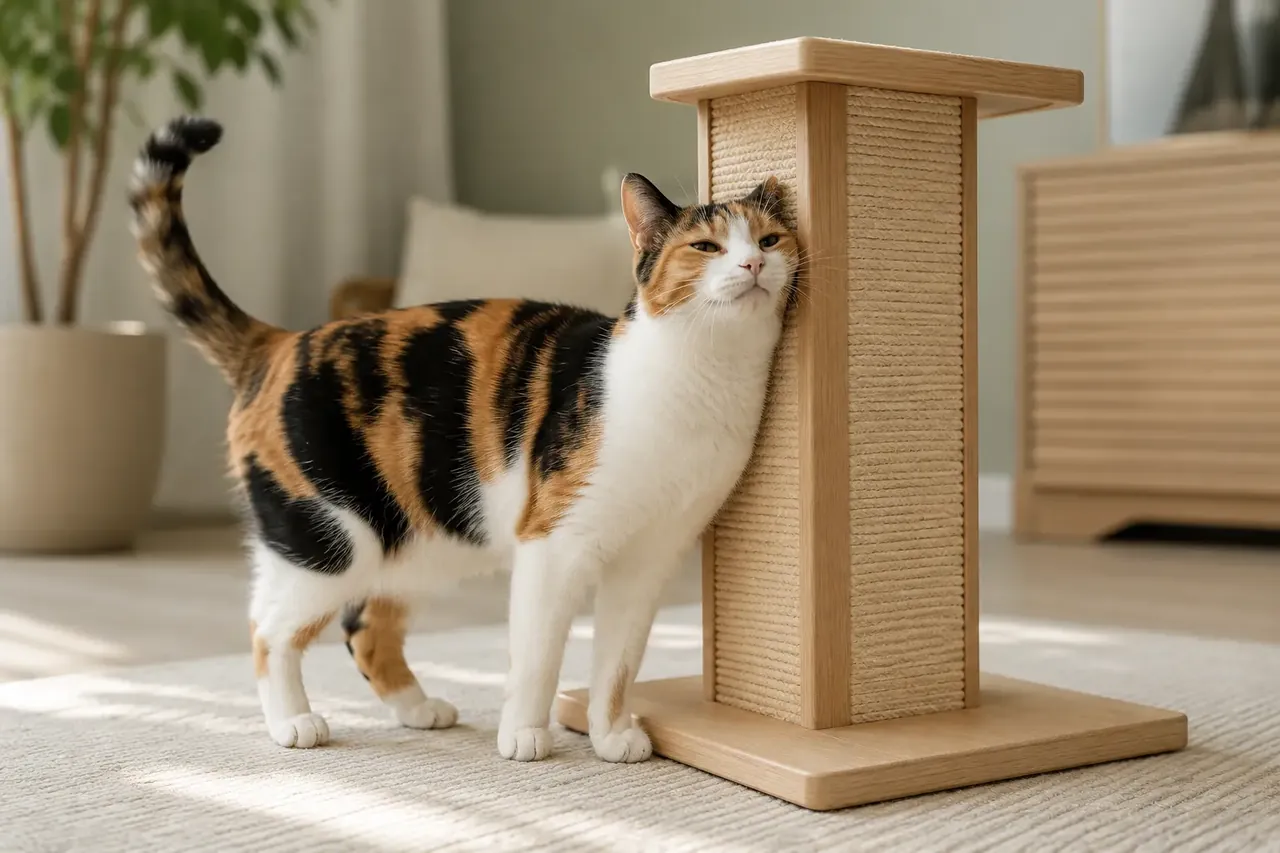 Topic illustration selected for this guide. Some learning images may be AI-assisted.
Slow blinking: what the research can—and cannot—tell us — the quick answer
✓ Soft eyes and relaxed posture belong together
✓ Return a slow blink without staring
✓ Do not demand a response
✓ Tension or avoidance means give space
Studies support an association between slow-blink sequences and positive cat–human interaction, but one blink is not a universal sentence. The rest of the face, body and situation still decides how safe the moment feels.
What a slow blink looks like
The eyelids narrow gently, close or nearly close, then reopen without facial tension. It often appears when the cat is settled rather than vigilant.
Try a respectful version
Sit at a comfortable distance, angle your body slightly away, soften your gaze and close your eyes slowly. Look to the side afterward instead of maintaining a hard stare.
Read the whole answer
A cat may blink, approach, remain relaxed or leave. All are valid. Flattened ears, a crouch, tail lashing, skin twitching or withdrawal means interaction should pause.
Health comes first
Squinting in one eye, discharge, cloudiness, redness, unequal pupils or holding an eye closed is not social blinking and needs prompt veterinary assessment.
Your quick checklist
Your progress is saved on this device.
Three simple things you can do
You do not have to change everything today. Pick one step that feels realistic, try it and see how your cat responds.
- 1Choose a calm moment and sit at a comfortable distance with your body angled slightly away.
- 2Soften your gaze, close your eyes slowly once and then look gently to the side.
- 3Read the cat's whole posture and accept blinking, approaching, resting or leaving as valid responses.
Common mistakes
×Staring while repeatedly demanding a blink back.
×Treating one eye movement as a universal sentence without context.
×Mistaking one-sided squinting, redness or discharge for social blinking.
Questions cat people ask
Does a slow blink mean a cat loves me?+
Research links slow-blink sequences with positive cat–human interaction, but it is not a literal phrase. Relaxed eyes, posture and context should agree.
Why is my cat closing only one eye?+
Persistent one-sided squinting, discharge, cloudiness, redness or unequal pupils may signal an eye problem and need prompt veterinary assessment.
Still looking for the right answer?
Search the full EverYes Cats encyclopedia with your own words — a symptom, food, behaviour, breed or everyday question.
Checked, dated and transparent
- Prepared by
- EverYes Cats editorial team
- Last updated
- 7 August 2026
- Source checked
- 7 August 2026
- Primary reference
- Scientific Reports ↗
We begin with the named reference, rewrite the information in plain language and add practical cat-parent steps. Urgent health statements are checked against veterinary sources. This guide has not been individually reviewed by a veterinarian unless explicitly stated. It provides education, not diagnosis or treatment.
Spotted something unclear or outdated? Tell us so we can review it.
Your answer helps us improve the cat encyclopedia.
Read clusters, not single signals. Ears, eyes, whiskers, tail, posture, movement, distance and context together reveal whether a cat feels relaxed, uncertain or overwhelmed.